
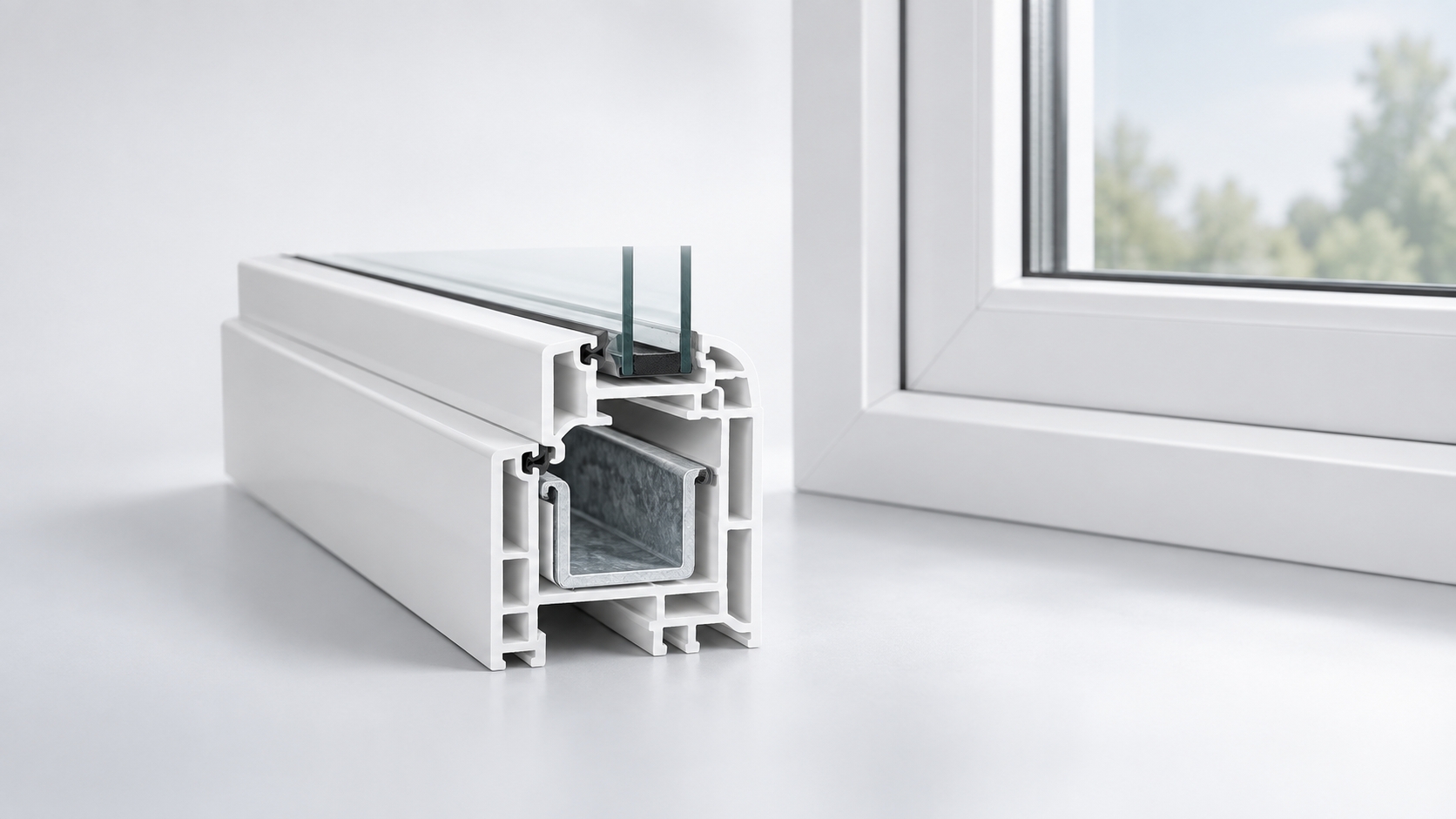
UPVC profiles provide insulation, weather resistance and a clean finished surface, but the plastic profile alone may not provide enough rigidity for every window size or opening style. Steel reinforcement is inserted into designated chambers inside the UPVC frame or sash to increase stiffness and provide a stronger base for selected hardware fixings. The reinforcement should be chosen as part of the complete window design.
Where the reinforcement is installed
UPVC profiles contain several internal chambers. One chamber may be designed to receive galvanized steel reinforcement. The steel stays inside the profile and is not visible after fabrication. It should fit the intended chamber and should not extend into drainage paths, glazing spaces or other functional parts of the profile. Different frame, sash, mullion and door profiles may require different reinforcement shapes.
What reinforcement does
· Improves the rigidity of long frame and sash members
· Supports the weight of glass and moving panels
· Provides a stronger fixing base for hinges, locks and handles where required
· Helps the fabricated unit resist deformation during handling, transport and use
Reinforcement does not replace correct profile selection or fabrication. Corner welding, drainage, glazing blocks, hardware position and installation anchors still need proper control. A strong steel liner cannot correct an unsuitable sash size or a poorly installed frame.
Thickness is only one part of the specification
Buyers often ask only for the steel thickness, but shape, width, coating, fit and position also matter. A reinforcement that fits the profile chamber correctly can support the system more effectively than a poorly matched piece of thicker metal. The required thickness may also vary between a small fixed window, a large sliding sash and a frequently used door. Manufacturers should review the actual design rather than applying one steel specification to every component.
When reinforcement becomes especially important
Large windows, tall doors, dark colored profiles, heavy glazing and exposed elevations may require more attention to reinforcement. Dark finishes can experience higher surface temperatures in direct sun. Large moving sashes place more load on rollers, hinges and corner joints. High wind locations add pressure to the frame and glazing. These conditions may require reinforced profiles, additional mullions, smaller panel sizes or a different opening arrangement.
Questions to ask a supplier
· Which frame and sash members contain reinforcement
· What reinforcement shape and thickness are proposed
· How hardware is fixed through or into the reinforcement
· Whether the design has been reviewed for the glass weight and opening size
Section drawings and cut samples are useful when comparing suppliers because reinforcement is hidden in the finished product. For project orders, the window schedule should identify unusually large units so they can be checked separately. HENENG can review the drawings and recommend a suitable profile and reinforcement arrangement before production.
Reinforcement and installation
The reinforced window still needs to be anchored correctly to the building opening. Fixing location and spacing depend on the frame, opening substrate, unit size and installation method. Packers should support the frame without twisting it, and installation screws should not pull the profile out of square. After installation, the sash must operate smoothly and the frame drainage routes must remain open. These site controls protect the performance built into the factory assembled unit.
For buyers comparing samples, a visible piece of steel at one cut end does not prove that every required member has the correct reinforcement. Ask for the approved profile section, reinforcement schedule and fabrication details for the ordered design. The strongest solution is a coordinated specification covering profile, steel, hardware, glass and installation rather than a single thickness statement used as a marketing claim.